
Resolve into the void
so that you realize that you never could

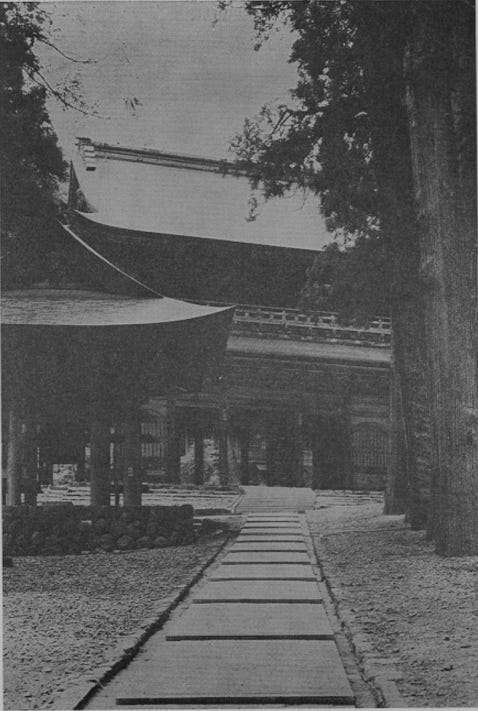
“There is more wisdom in your body than in your deepest philosophy.” Nietzsche, Friedrich, Thus Spoke Zarathustra
Nothingness. Shunyata is not the perceptual absence of everything. Not the imagined empty room in which only darkness or light resides, where you find yourself as the absolutely unstirred pure presence. Neither is the void the substrate behind everything, in which all forms appear and vanish again. Realizing the void is not an orgasmic ejaculation of your self so that you remain without ego. It is way more absurd; the void is found nowhere else than now.
When you can’t bring about nirvana,
Nor the purification of cyclic existence,
What is cyclic existence,
And what is the nirvana you examine? (Nagarjuna & Garfield, 1995, p. 42)
Clinging to the rock won’t save you if both of you are falling from the same cliff. Nagarjuna graces you by snatching the rock. What is the difference between nirvana and samsara? What is the difference between illusion and truth?
Rinzai Zen forces you by koans into the inescapable paradox of the illusion, while Soto Zen penetrates directly into where you are right now.
Shikantaza. Just sit. Do not be occupied with anything other than sitting. Yet you don’t sit. You still want to be occupied with something, because you think this miserable being you are right now cannot be it. All those scars and open wounds, all the anxiety and pain must be smoothed over, so you think. Diving into silence, you immediately encounter seemingly unbearable, overwhelming pain. As soon as you think of your deceased parents, the wounds from past relationships, the uncertainty of the future, or your own death, you do not allow yourself to be that. You have always fought against yourself. So it is the hardest thing to stop doing that. When does the time finally come when you reap the fruits of not having to be yourself anymore? “Could I really carry that much pain? Could I really be that anxious?” No, there still has to be something wrong. You want to finally reach the end of yourself, which would gift you liberation, to finally see into the nature of existence in whose light the demons pulling the strings are finally and eternally burned.
As Hung-Jen, the fifth patriarch of Zen, grew old, he was in need of finding a successor. Monks were instructed to write gathas in order to display their spiritual maturity. Shen-hsiu persuaded monks not to submit a gatha. He then secretly submitted the first and only one himself anonymously:
‘The body is a bodhi tree the mind is like a standing mirror always try to keep it clean don’t let it gather dust.’ (Huineng & Red Pine, 2006, p. 6)
Hung-Jen called Shen-hsiu into a private room, suspecting that he wrote it. Outwardly, Hung-Jen displayed to all monks that Shen-hsiu’s gatha was the way. In direct confrontation with Shen-hsiu, he told him that his gatha was not an expression of the final enlightenment and gave him the task of revising his gatha. Shen-hsiu failed to write a new gatha. Hui-neng, a cook of the monastery, heard of the gatha and wanted to read it. He compiled the following verses:
Bodhi doesn’t have any trees this mirror doesn’t have a stand our buddha nature is forever pure where do you get this dust? The mind is the bodhi tree the body is the mirror’s stand the mirror itself is so clean dust has no place to land. (Huineng & Red Pine, 2006, p. 7)
Reading this, Hung-Jen transmitted the Dharma to Hui-neng, but with the desire for him to disappear from the monastery. Hung-Jen knew that if the simple cook Hui-neng were to become his successor, he would be injured, if not even killed.
Keeping your mirror clean: the desire to find purity beneath a tarnished layer. There is no tarnished layer! There is no mirror! Where should you escape to? Your suffering is the shadow cast by wanting to escape. Where could you stand? Nirvana and Samsara are not two; you just want to escape from one.
When all things are the Buddha-Dharma, there is enlightenment, illusion, practice, life, death, Buddhas, and sentient beings. When all things are seen not to have any substance, there is no illusion or enlightenment, no Buddhas or sentient beings, no birth or destruction. Originally the Buddhist Way transcends itself and any idea of abundance or lack – still there is birth and destruction, illusion and enlightenment, sentient beings and Buddhas. Yet people hate to see flowers fall and do not like weeds to grow. (Dōgen Zenji & Nishiyama, 1975, Chapter 1)
Illusion and enlightenment are not different. Shikantaza. Just sit. You are that, which you are running away from. Shunyata. The void is where you sit, stand or lay right now. Liberation. Stop escaping.
Emptiness; concepts do not grasp reality. The story you tell yourself, that you firstly have to get to x or lose y in order to be at peace, is recognized as just auditory mumbo jumbo. Chögyam Trungpa puts it thus:
This is the experience of shunyata. Shunyata in Sanskrit means literally “void” or “emptiness,” that is to say, “space,” the absence of all conceptualized attitudes.(Trungpa & Baker, 1973, pp. 197–198)
Not the conceptualized attitudes are the problem, but the idea that those grasp the essence of reality “out there.” This conceptualized reality treated as a device for getting at “reality-itself,” being an accurate “mirror” is maya, illusiory. To treat conceptualized reality as “reality-itself” is the attempt to get full based on the recitation of the desired entry on a menu card. In this vein, Dogen’s statement that emptiness is emptiness and form is form can be understood. Thoughts are thoughts, forms are forms; nothing spills over; form is empty of thoughts, yet this in itself is a thought.
When you understand this you will be able to comprehend the formula “Form is emptiness. Emptiness is form.”8 Form is form, emptiness is emptiness. It is the hundred grasses and all phenomena.(Dōgen Zenji & Nishiyama, 1975, Chapter 2)
Which word can you utter which rescues yourself? Phew! After all it was a trick you played upon yourself! The eternal drama keeping the wheel spinning: escaping what is inescapable. Therefore the wise sage, as it is said in the Dao De Jing, unlearns something everyday. The sage realizes that there is no way out, that the only way out is giving up the search for a way out. Yet, you cannot do it. Why would you give up the search? Just to be free? See how this can become the same doomed attempt again? You wanting to let go in order to be free?
To learn the Buddhist Way is to learn about oneself. To learn about oneself is to forget oneself. To forget oneself is to perceive oneself as all things. To realize this is to cast off the body and mind of self and others. When you have reached this stage you will be detached even from enlightenment but will practice it continually without thinking about it. (Dōgen Zenji & Nishiyama, 1975, Chapter 1)
References
Dōgen Zenji, & Nishiyama, K. (1975). Shōbōgenzō (The Eye and Treasury of the True Law). Nakayama Shobō. Epub
Huineng, & Red Pine. (2006). The Platform Sutra: The Zen Teaching of Hui-neng. Counterpoint.
Nagarjuna, & Garfield, J. L. (1995). The Fundamental Wisdom of the Middle Way: Nagarjuna’s Mulamadhyamakakarika. Oxford University Press.
Trungpa, C., & Baker, J. (1973). Cutting through spiritual materialism. Shambhala.